




Once your baby starts pulling up on the couch, it's natural to wonder if there's anything you can do to help those first steps along. The good news: you don't need special gear or a training plan. Babies learn to walk through lots of everyday play, practice and encouragement from the people they love.
Below are 10 gentle, play-based ideas drawn from guidance by the American Academy of Pediatrics (AAP) and the CDC, plus a few safety basics and what to skip.
The short answer: Give your baby plenty of safe floor time, a reason to move (like a favorite toy just out of reach), sturdy things to pull up on and push, and lots of cheering. Skip the seated baby walker. The AAP says walkers don't help babies learn to walk and can be dangerous.
First, a quick word on timing
Every baby gets there on their own schedule. According to the CDC, most babies pull up to stand and walk while holding on to furniture by their first birthday, take a few steps on their own by 15 months, and walk without holding on by 18 months. The AAP notes that many babies take their first steps around their first birthday, but starting earlier or later is normal.
The ideas below aren't about rushing your baby. They're about giving them chances to build strength, balance and confidence at their own pace. For the full timeline, see our guide on when babies start walking.
10 gentle, play-based ways to help your baby walk
1. Give them lots of floor time
Crawling, rolling, scooting and sitting all build the muscles walking depends on. The AAP explains that this kind of activity strengthens your baby's body in preparation for walking. A clean, safe stretch of floor and some time to explore is one of the best "tools" you can offer. (Some babies never crawl and scoot on their bottoms instead. The AAP says that's fine as long as they're using both sides of their body equally.)
2. Put favorite toys just out of reach
Babies move when they have a reason to. The AAP suggests placing interesting objects just beyond your baby's reach. Once they're pulling up, try setting a toy on the couch cushion or a low, sturdy table so they have to stand to get it.
3. Build a pillow obstacle course
For crawlers who are getting more confident, the AAP suggests creating mini obstacle courses with pillows, boxes and sofa cushions. Hide behind one and pop out with a "peekaboo!" to make it a game. Always stay right there, though. The AAP warns that a baby who slips between pillows or under a box might not be able to get out.
4. Set up a safe "cruising route"
Cruising (walking sideways while holding on to furniture) is a big step toward walking. Arrange stable furniture so your baby can travel from the couch to an ottoman to a low table. The AAP advises making sure anything your baby uses for support has no sharp edges and is properly weighted or attached to the floor.
5. Teach them how to sit back down
Here's one many parents don't think of. When babies first learn to pull up, they often don't know how to get back down, and they may cry for help (especially in the crib). The AAP suggests gently showing your baby how to bend their knees to lower themselves without falling. It builds leg control and saves you a few trips to the nursery.

6. Play squat-and-stand games
As walking skills grow, the AAP notes that babies learn to squat, pick something up and stand again. You can invite this kind of practice by scattering a few soft toys or blocks on the floor while your baby is standing and holding on. Then cheer each time they bend down and come back up.
7. Let them push something sturdy
The CDC suggests letting babies push things around, like empty boxes, a "kiddie chair" or push toys, so they can practice walking. If you choose a push toy or wagon, the AAP recommends one that has a bar to push and is weighted so it won't tip when your baby pulls up on it. Our guide to things to help babies walk covers what to look for in a push toy and what to skip. A sturdy cardboard box on a carpet works surprisingly well, too.
8. Hold hands for short walks
Many babies love a hand-in-hand stroll down the hallway. The CDC encourages letting your baby practice walking by holding your hands or holding on to safe furniture. Keep these walks short and playful, and mix them with plenty of time for your baby to pull up, cruise and balance on their own.
9. Make "walk to me" a game
Kneel a short distance away with open arms and let your baby come to you, starting with just a step or two. As they get steadier, try a simple game of hide-and-seek. The CDC suggests letting your child watch you hide behind a chair and then come "find" you. Positive words and hugs go a long way: the CDC encourages celebrating the behaviors you want to see.
10. Put on some music and dance
The CDC encourages singing or playing children's songs and songs your family enjoys, and dancing with your child. Bouncing, swaying and stepping to music while holding on to the couch (or your hands) is great balance practice that just feels like fun.
Keep practice safe
A baby who is on the move needs a home that's ready for them. A few basics from the AAP and CDC:
- Gate the stairs. The AAP recommends sturdy gates at the top and bottom of staircases and says babies shouldn't play on stairs alone.
- Anchor furniture and TVs. Babies who pull up and climb can tip over dressers and shelves. The Consumer Product Safety Commission's Anchor It! campaign recommends anchoring all furniture with drawers, doors and shelves to the wall.
- Clear the floor of small things. Coins, button batteries and balloon pieces are especially dangerous if a baby puts them in their mouth, according to the AAP.
- Move sharp or breakable items out of reach and lock away medicines, chemicals and cleaning products, as the CDC advises. The AAP's guide to childproofing your home for poisons walks you through it room by room.
- Save the Poison Help line number, 800-222-1222, in your phone (a CDC recommendation).
- Stay close. Supervision matters most during new skills, like pulling up and climbing.

What about bumps and falls?
Falls are part of learning to walk. The AAP notes that even in a safe home, it's almost impossible to avoid every bump and bruise. Their advice: stay matter-of-fact. Offer a quick hug or a reassuring word and send your little one on their way again. Babies take their cue from you, so if you stay calm, they usually will too.
Skip the baby walker
It's tempting to think a seated baby walker would help, but the AAP says walkers don't help babies learn to walk and can actually delay walking. They're also a serious safety risk: according to the AAP, a child in a walker can move more than 3 feet in 1 second, and most walker injuries happen while adults are watching. The AAP has called for a ban on the manufacture and sale of baby walkers with wheels.
Safer alternatives the AAP suggests include stationary activity centers (no wheels), play yards and sturdy push toys.
Do babies need shoes to learn to walk?
Not indoors. The AAP says children need shoes once they begin walking outside, so on clean, safe floors at home many families simply let little ones practice barefoot.
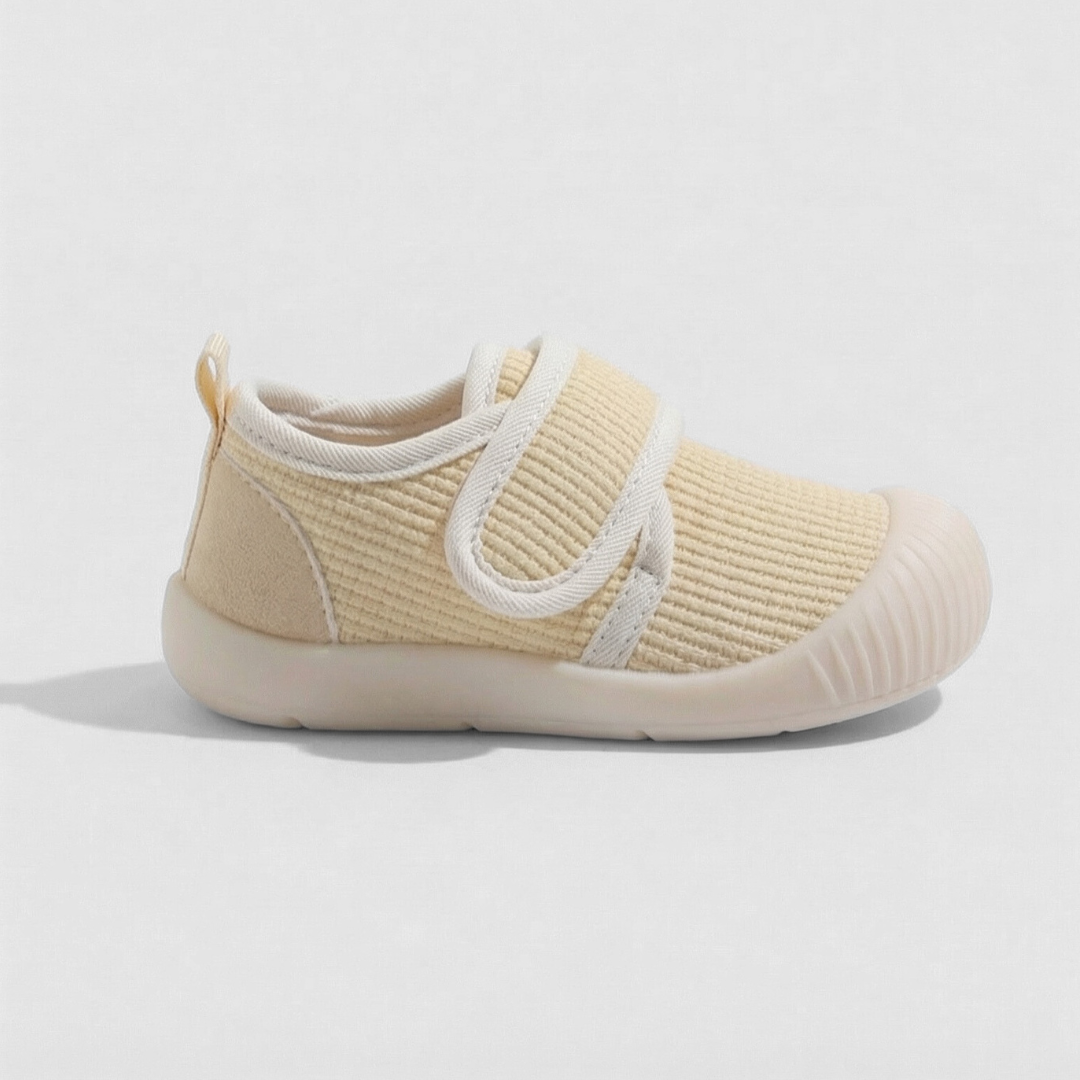
When it's time for outdoor shoes, the AAP recommends ones that are closed-toe, comfortable and flexible, with nonskid soles and room to grow. Babies don't need special arches, inserts or stiff, reinforced heels. Our Baby Waves first walkers are made with that in mind, and our size guide shows you how to measure your baby's feet at home.
When to check in with your pediatrician
There's a wide range of normal, but you know your child best. The CDC encourages parents to talk with their child's doctor if their child isn't meeting one or more milestones, has lost skills they once had, or if they have any other concerns. The AAP also suggests mentioning it if your baby doesn't seem to be moving normally, such as favoring one side of the body. Your pediatrician can check your child's development and, if needed, point you toward extra support. The free CDC Milestone Tracker app is a handy way to keep track between visits. You can also contact your state's early intervention program (find yours at cdc.gov/FindEI).
Frequently asked questions
Can I make my baby walk sooner?
Not really, and there's no need to. Walking depends on your baby's own strength, balance and readiness. What you can do is give them safe, fun chances to practice, which helps them build skills when they're ready.
Is it okay to hold my baby's hands while they walk?
Yes. The CDC lists holding your hands as one way babies can practice. Just balance hand-holding with plenty of time to pull up, cruise and stand on their own.
Are push toys better than baby walkers?
Yes. A sturdy push toy that your baby stands behind and pushes is a different thing from a seated walker with wheels. The AAP recommends choosing one with a bar to push that's weighted so it won't tip, and always supervising.
How can I encourage my baby to walk?
Make walking a game. Put a favorite toy just out of reach, kneel a few steps away and invite your baby to come to you, and cheer every wobbly step. Plenty of floor time and a safe route along sturdy furniture give them the practice they need. For simple gear that helps (and what to skip), see our list of things to help babies walk.
What exercises help a baby walk?
The best "exercises" are everyday play: pulling up to stand, cruising along the couch, squat-and-stand games to pick up toys, pushing a sturdy, weighted push toy and short walks while holding your hands. Each one builds the leg strength and balance your baby needs for independent steps.
How do I help a toddler who isn't walking yet?
Keep offering the same playful practice, without pressure, since every child moves at their own pace. By about 18 months, most children walk without holding on. If your toddler isn't walking on their own by then, or you notice anything that worries you, talk with your pediatrician. Our guide to when do babies start walking covers the typical timeline and signs worth mentioning to your doctor, and our guide for when your toddler isn't walking yet explains when to wait and when to check in.
My baby walked, then went back to crawling. Is that normal?
Completely. The AAP notes that new walkers often crawl at times because babies use whatever is easiest and fastest. They'll walk more as they get steadier.
This article is for general informational purposes only and isn't a substitute for professional medical advice. Every child develops at their own pace. If you have questions or concerns about your child's health or development, please talk with your pediatrician.
Sources
- American Academy of Pediatrics, HealthyChildren.org, Movement Milestones in Babies 8 to 12 Months Old
- American Academy of Pediatrics, HealthyChildren.org, Baby Walkers: A Dangerous Choice
- American Academy of Pediatrics, HealthyChildren.org, Childproofing Your Home for Poisons
- Centers for Disease Control and Prevention (CDC), Milestones by 1 Year, 15 Months and 18 Months, plus the Milestone Tracker App and Early Intervention
- U.S. Consumer Product Safety Commission, Anchor It!
- Health Resources and Services Administration (HRSA), Poison Help





Share and get 15% off!
Simply share this product on one of the following social networks and you will unlock 15% off!