




The moment your baby starts pulling up on the couch, every smooth floor in your home suddenly looks a little slippery. Regular socks can turn hardwood and tile into an ice rink, which is why so many parents start searching for non-slip socks for infants right around the time those first wobbly steps appear.
But do grip socks actually help babies walk, or are bare feet better? This guide covers what pediatric experts say, when non-slip socks make sense (and when to skip them), what to look for in a pair, and a few safety checks that most sock guides leave out.
The short answer: Non-slip socks won't teach your baby to walk any sooner, but they can help keep a new stander or cruiser steady on smooth floors when bare feet aren't practical, like on chilly days. Experts say bare feet are still best for foot development at home. Once your baby starts pulling up to stand, any socks or booties they wear should have nonskid soles so they don't slip.
Do babies need non-slip socks?
Not always. Nemours KidsHealth explains that barefoot is still best for a baby's foot development, and that a pair of socks or booties with non-skid soles is fine for chilly toes. The American Academy of Pediatrics (AAP) agrees that in the early months, babies' feet develop best when they're not confined in shoes, and that socks are all that's needed to keep their feet warm.
Where grips start to matter is timing. Pathways.org, whose resources are developed with pediatric physical and occupational therapists, says babies can wear socks or booties from birth to keep their toes warm, but once your baby is pulling up to stand or taking first steps, those socks should have non-skid soles so they don't slip.
So for a newborn or a baby who isn't on their feet yet, any soft, comfortable sock is fine. For a baby who is pulling up, cruising or walking, choose grippy soles or bare feet.
Do grip socks help babies walk?
They help in one specific way: traction. A regular sock has a smooth fabric bottom that can slide on hardwood, tile or laminate. Rubbery grip dots give your baby something to push against, so a slip is less likely while they stand, squat and cruise.
What grip socks don't do is speed up walking itself. Walking comes from months of building strength, balance and confidence. KidsHealth notes that putting shoes on a baby sooner won't help them walk any faster or better, and the same thinking applies to socks. According to the CDC, most babies pull up to stand and walk while holding on to furniture by their first birthday, and most take a few steps on their own by 15 months. (Our guide on when babies start walking covers the full timeline.)
The AAP describes how babies first try tentative steps while holding on for support and cruise alongside furniture, letting go now and then before grabbing hold again. That's exactly the stage where a sock that slides out from under them can be frustrating. For playful ways to build those skills, see our 10 gentle ways to help your baby walk.

Bare feet vs. grip socks vs. shoes
- Bare feet: the experts' first choice indoors on clean, safe floors. Your baby can feel the ground and nothing slides.
- Non-slip socks: a good middle ground at home when floors are cold or you'd rather keep feet covered.
- Shoes: for walking outdoors. The AAP says that once children start walking outside, they need shoes for protection.
When to use non-slip socks for infants
Baby socks with grip are most useful when bare feet aren't the best option. A few common situations:
- Cold floors. Tile, basements and drafty winter rooms can be chilly. Grippy socks keep toes warm without the sliding.
- Smooth, slippery surfaces. Hardwood, laminate and tile are where plain socks slip the most.
- Other people's homes and indoor play spaces. When you don't know how clean the floor is, grip socks are a handy layer.
- Travel. Hotel rooms, airport play areas and grandparents' kitchens are all new floors to explore. (Our tips for flying with a baby include a packing list.)
On warm days at home, on a clean and safe floor, many families simply go barefoot.
What to look for in baby socks with grip
- Grips across the sole. Look for grip dots or treads that cover the ball of the foot and the heel, where your baby pushes off and lands.
- Soft, breathable fabric. Little feet get sweaty. MedlinePlus notes that the fungus behind athlete's foot thrives in warm, moist areas and recommends clean cotton socks, changed as often as needed to keep feet dry. Cotton-rich blends are a comfortable everyday choice.
- A cuff that stays on without squeezing. A sock that twists or falls off is a slip waiting to happen, but elastic that's too tight isn't comfortable either. If you see deep marks around your baby's ankle when you take the socks off, try a looser pair or the next size up.
- The right size. Socks that are too big bunch under the foot, and the extra fabric can slide. Baby feet grow quickly, so check the fit often. Our baby shoe size chart by age can help you estimate where your baby is.
- No loose threads inside. Turn socks inside out now and then and snip any stray threads (see the safety section below for why).
- Easy to wash. Grip socks get dirty fast. Follow the care label, and replace pairs once the grips wear smooth.
Our own anti-slip baby socks come in a mix-and-match five-pack with grips on the soles, made for exactly this crawling-to-cruising stage.

Non-slip socks vs. non-slip baby shoes
Think of it as indoors versus outdoors. Grip socks are for home and other clean indoor floors. Once your little one is walking outside, they need real shoes to protect their feet from objects on the ground, hot pavement in summer and cold snow in winter, as Pathways.org explains.
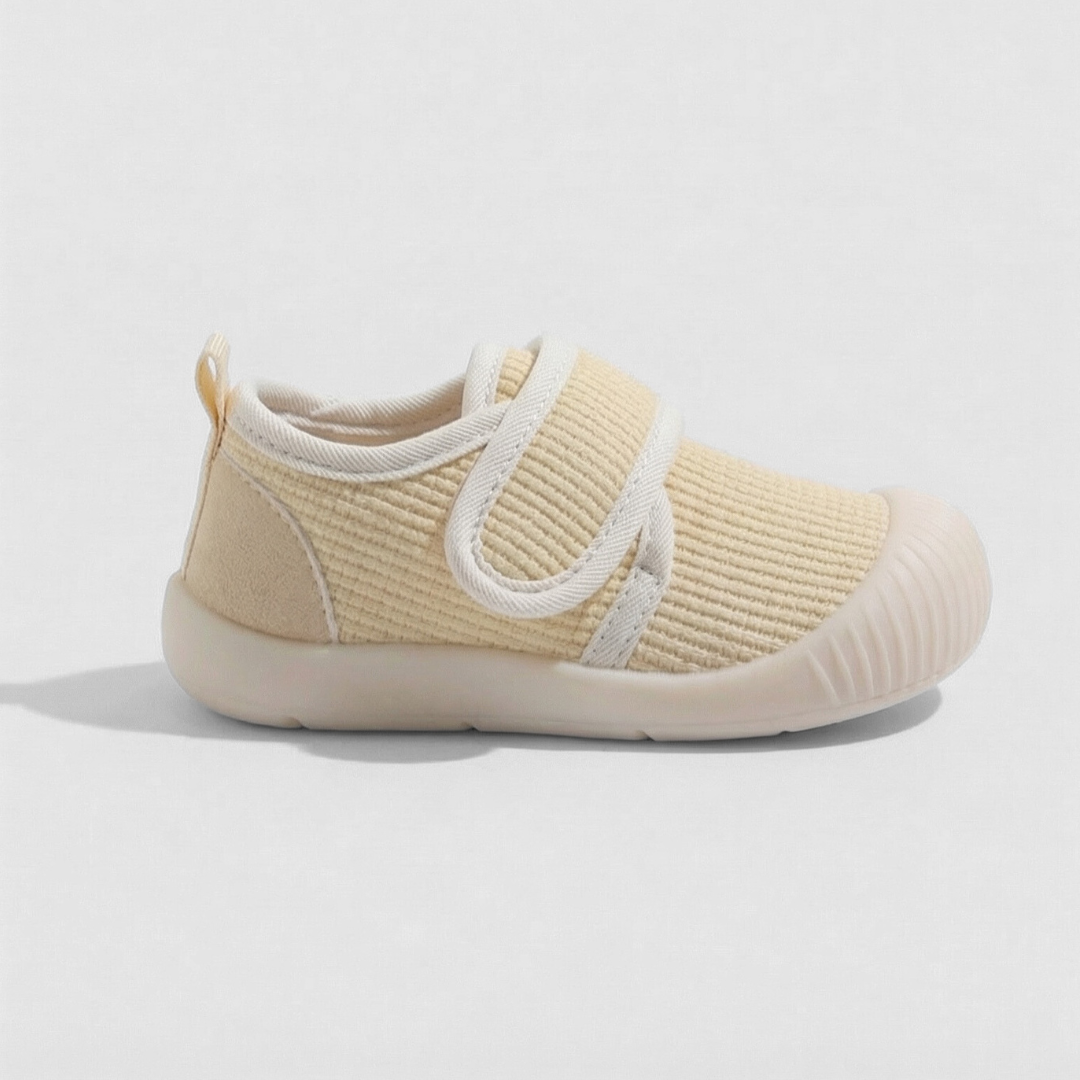
For that first pair, the AAP recommends shoes that are closed-toe, comfortable and flexible, with nonskid soles and room to grow. KidsHealth adds that hard, inflexible soles can make it harder for a baby to learn to walk. Our guides to first walking shoes for baby and baby mesh shoes walk you through what to look for. If you'd like something in between for indoor-outdoor days, soft sock shoes combine a sock-like upper with a flexible sole.
Safety tips for babies in grip socks
Grip socks reduce slipping, but they don't make a home fall-proof. A few habits help:
- Still supervise around stairs. Nemours KidsHealth's guide to preventing injuries from falls says never to leave a child alone around stairs, even gated ones, and recommends hardware-mounted safety gates at the top and bottom of every stairway.
- Clear the cruising route. The same guide suggests skipping loose rugs and cleaning up spills right away. A grippy sock can still slide on a wet floor.
- Check toes for hairs and threads. Cleveland Clinic explains that hair tourniquet syndrome is a rare condition where a strand of hair or a thread of cloth wraps tightly around a baby's toe or finger. It can happen when babies move their toes around in socks, mittens or pajamas, and loose hair is more common in the months after birth. Signs include redness, swelling and crying that won't settle. Check your baby's toes when you change socks, and call your pediatrician right away if you spot a band of hair or thread or a swollen toe.
- Layer up for real cold. Grip socks are for indoors. For snow and wet weather, the AAP's winter safety tips call insulated boots essential and advise changing out of wet clothes right away.
Want more ideas for supporting new walkers safely? Our list of things to help babies walk covers push toys, cruising spots and what to skip.
Frequently asked questions
When should babies start wearing grip socks?
Once your baby starts pulling up to stand or taking first steps. Pathways.org says socks or booties are fine from birth to keep toes warm, and that from the pulling-up stage on, they should have non-skid soles so your baby doesn't slip.
Can my baby wear grip socks instead of shoes?
Indoors, yes. Bare feet are best on clean, safe floors, and non-skid socks are a good option when it's chilly, according to KidsHealth. Outdoors, the AAP says walking children need shoes for protection.
Are there any downsides to grip socks?
A few. They can cover up the feel of the floor that bare feet give, they can slide on wet spots, and socks that are too tight or full of loose threads can bother little toes. Use them as a backup to barefoot time, not a replacement, and check the fit often.
How do I make baby socks non-slip?
The simplest option is a pair made with grips already on the soles. Homemade fixes like glued-on pads or paint dots can peel off over time, so if you try one, check the socks often and toss any pair that starts to flake. Or skip the socks and let your baby go barefoot on a clean, warm floor.
This article is for general informational purposes only and isn't a substitute for professional medical advice. Every child develops at their own pace. If you have questions or concerns about your child's feet, walking or health, please talk with your pediatrician.
Sources
- American Academy of Pediatrics, HealthyChildren.org, Shoes for Active Toddlers, Movement Milestones in Babies 8 to 12 Months Old and Winter Safety Tips
- Nemours KidsHealth, Is My Baby Ready for Shoes? and Preventing Injuries From Falling, Climbing, and Grabbing
- Pathways.org, When Do Babies Start Wearing Shoes?
- Centers for Disease Control and Prevention (CDC), Milestones by 1 Year and Milestones by 15 Months
- MedlinePlus (U.S. National Library of Medicine), Athlete's Foot
- Cleveland Clinic, Hair Tourniquet Syndrome





Share and get 15% off!
Simply share this product on one of the following social networks and you will unlock 15% off!