




Once your baby starts pulling up on everything in sight, the baby aisle (and your social feed) fills up with gear promising to get them walking. Push walkers, harnesses, activity tables, special shoes: it's a lot. So which things really help babies walk, and which can you skip?
This guide to things to help babies walk sorts the useful from the unnecessary, using guidance from the American Academy of Pediatrics (AAP), the CDC and MedlinePlus. Good news first: most of what helps is free or already in your living room. If you're looking for play ideas and games, our companion post on how to help your baby walk has 10 of them. This post focuses on the things: what to set up, what to buy and what to leave on the shelf.
The short answer: The best things to help babies walk are simple: safe floor space, sturdy furniture to cruise along, a stable push toy with a bar and some weight to it, bare feet indoors, and flexible, nonskid shoes once they walk outside. Skip seated baby walkers with wheels. The AAP says they don't help babies learn to walk, can delay walking and send thousands of children to hospitals every year.
First, what babies really need to walk
Walking comes from strength, balance and practice, and babies build all three on their own timeline. According to the CDC, most babies pull up to stand and walk while holding on to furniture by 1 year, take a few steps on their own by 15 months and walk without holding on by 18 months. MedlinePlus notes in its guide to toddler development that many children walk well by 12 to 15 months.
No product can skip those steps. What the right things can do is give your baby more chances to practice, safely. For the full timeline and early signs, see our guide on when babies start walking.
8 things to help babies walk (that are actually worth it)
1. A clear, safe stretch of floor
Floor time is where walking starts. The AAP explains that crawling, scooting and pulling up all strengthen your baby's body in preparation for walking, in its guide to movement milestones from 8 to 12 months. Clear a space of tripping hazards and small objects. Pathways.org, a nonprofit focused on early development, suggests surrounding early walkers with soft surfaces, since falls are expected. A rug or play mat next to the couch works well.
2. Sturdy furniture to cruise along
Before most babies walk on their own, they cruise: side-stepping while holding on to a couch, ottoman or low table. You can line up stable furniture into a little "cruising route." The AAP says anything your baby uses for support should have no sharp edges and be properly weighted or attached to the floor.
Because pulling up puts a baby's weight on furniture, anchoring matters too. The Consumer Product Safety Commission's Anchor It! campaign recommends anchoring all furniture with drawers, doors and shelves to the wall to prevent tip-overs.

3. A stable push toy
A push toy is the one piece of gear that comes up again and again. The CDC suggests letting babies push things around so they can practice walking, and lists "give toys that your child can push or pull safely" among its tips for 18-month-olds. The AAP recommends a sturdy wagon or kiddie push car with a bar to push that is weighted so it won't tip when your baby pulls up on it.
What to look for:
- A wide, stable base that doesn't tip when your baby leans or pulls up.
- Some weight or resistance, so it doesn't roll away faster than your baby can step. Pathways.org suggests slowing a lightweight push toy with your hands at first, or adding weight, like books in the basket of a toy shopping cart.
- Your baby's feet on the floor, carrying their own weight. That's what separates a push toy from a seated walker.
Pathways.org also suggests watching for toe-walking while your baby uses a push toy, and sticking to a weighted cart if you see it.
4. Things you already own
You don't have to buy a push toy at all. The CDC's 1-year milestone tips suggest letting babies push empty boxes, a "kiddie chair" or push toys. A sturdy cardboard box on carpet gives a nice amount of resistance, and a couch cushion on the floor makes a soft spot to land.
5. A favorite toy (or two)
Babies move when they have a reason to. Pathways.org suggests holding a favorite toy just out of reach so your baby has to come to you. It also suggests giving a baby who is standing well something small to carry, like a little toy or an egg shaker. With their hands full, they may try steps without holding on.
6. Bare feet indoors
The cheapest walking aid is no shoes at all. The AAP's guide to shoes for active toddlers notes that babies' feet develop best if they're not confined in shoes, and that socks are all that's needed to keep feet warm indoors. On clean, safe floors at home, many families let new walkers go barefoot. On slippery floors, socks with grips can help; see our guide to non-slip socks for infants.
7. Flexible, nonskid shoes for outside
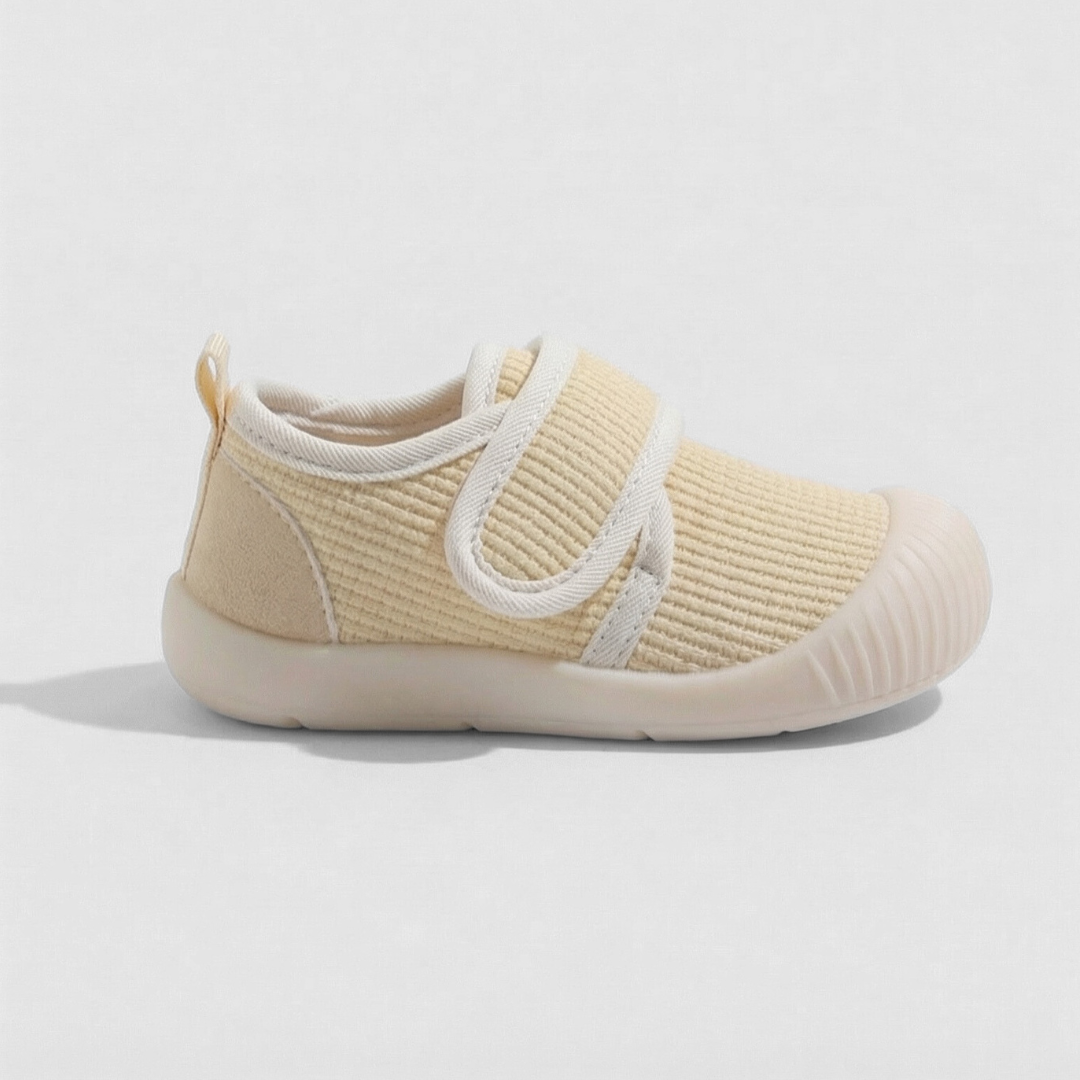
Once your little one starts walking outdoors, the AAP says they need shoes for protection. It recommends shoes that are closed-toe, comfortable and flexible, with nonskid soles and room to grow. Breathable uppers help too; see our guide to baby mesh shoes. Since first shoes usually last only 2 or 3 months, the AAP suggests buying well-made shoes without spending a lot, and checking the fit about once a month.
Our guide to first walking shoes for baby covers what to look for in detail. Baby Waves flexible first walker shoes are designed around the same features, and our sizing guide shows how to measure your baby's feet at home. Not sure where to start? Our baby shoe size chart by age lists typical sizes at each stage.

8. You: hands, music and a lot of cheering
The most useful "thing" in the room is a grown-up. The CDC encourages letting your baby hold your hands or hold on to safe furniture to practice. Pathways.org adds that in the early days, supporting your baby around the ribs can help them more than holding their hands, since it steadies their trunk. The CDC also suggests singing, playing music your family enjoys and dancing with your child; our list of songs to sing to your baby is a good place to start.
Things to skip
Seated baby walkers with wheels
These are the big one. The AAP's page Baby Walkers: A Dangerous Choice says walkers don't help children learn to walk and can actually delay walking. They're also a real safety risk:
- A child in a walker can move more than 3 feet in 1 second, and most walker injuries happen while adults are watching.
- Rolling down stairs is how most children get hurt in walkers, often with broken bones or severe head injuries.
- Walkers let babies reach higher, making it easier to grab hot drinks, pot handles or things that could poison them.
Even with safety standards in place since 1997, the AAP notes that walkers with wheels still let children move fast and reach higher. The AAP has called for a ban on their manufacture and sale, and walkers are already banned in Canada.
Shoes with "support" features
Stiff soles, high backs and built-in arches can look like they'd help, but the AAP says new walkers don't need wedges, inserts, high backs, reinforced heels, special arches or other features designed to shape and support feet. These have no proven benefit for the average child and may actually make walking harder.
When you need your hands free: safer alternatives
Part of a walker's appeal is a few minutes to make dinner. The AAP suggests safer options that are just as fun:
- Stationary activity centers, which look like walkers but have no wheels.
- Play yards or playpens, a safe zone for babies learning to sit, crawl or walk.
- High chairs, where older babies can play with toys on the tray.
Get your home ready for first steps
New walkers (and climbers) reach new places fast. MedlinePlus recommends:
- Installing gates on stairways and keeping gates or doors to stairs closed.
- Using window guards on windows above the ground floor.
- Adding corner guards to furniture where your toddler walks and plays.
- Moving chairs or ladders that might tempt a little climber.
Falls and bumps still happen, and the AAP says that's almost impossible to avoid. Stay matter-of-fact, offer a quick hug and send your little one on their way again.
When to talk with your pediatrician
There's a wide range of normal. MedlinePlus advises talking with your child's provider if your child isn't walking by 18 months, and the AAP suggests checking in if a 15-month-old shows no signs of getting ready to walk or little interest in moving around. The AAP also says walking on the toes is common early on, but toe-walking after age 2 should be checked. Our guides to baby milestones by month and toddler milestones by age show what usually comes before and after first steps. If anything worries you, your pediatrician is the best person to ask.
Frequently asked questions
Do push walkers help babies walk?
A sturdy push toy that your baby stands behind and pushes can be a great way to practice, and the CDC suggests push toys for this. Choose one with a bar to push that's weighted so it won't tip, as the AAP recommends, and always supervise. That's different from a seated walker with wheels, which the AAP advises against.
Are baby walkers bad for babies?
The AAP strongly urges parents not to use seated baby walkers. They don't help babies learn to walk, can delay walking and are linked to falls down stairs, burns and other injuries. A stationary activity center without wheels is a safer choice.
Is it better for babies to learn to walk barefoot?
Indoors, often yes. The AAP says babies' feet develop best when they aren't confined in shoes, and socks are enough to keep them warm. Once your child walks outside, flexible shoes with nonskid soles protect their feet.
Is it normal for a 1-year-old not to be walking?
Yes. The CDC lists taking a few steps alone as a 15-month milestone and walking without holding on as an 18-month milestone. If your child isn't walking by 18 months, or you have any concerns sooner, talk with your pediatrician. Our guide on what to do if your toddler is not walking yet covers the signs to watch for.
This article is for general informational purposes only and isn't a substitute for professional medical advice. Every child develops at their own pace. If you have questions or concerns about your child's health or development, please talk with your pediatrician.
Sources
- American Academy of Pediatrics, HealthyChildren.org, Baby Walkers: A Dangerous Choice, Movement Milestones in Babies 8 to 12 Months Old and Shoes for Active Toddlers
- Centers for Disease Control and Prevention (CDC), Milestones by 1 Year, Milestones by 15 Months and Milestones by 18 Months
- MedlinePlus (U.S. National Library of Medicine), Toddler Development
- U.S. Consumer Product Safety Commission, Anchor It!
- Pathways.org, Try These Activities to Encourage Walking





Share and get 15% off!
Simply share this product on one of the following social networks and you will unlock 15% off!