




Holiday drives to see family, a long weekend away, a move across the state: sooner or later, most families take a long car trip with a little one in the back seat. Toddlers aren't known for sitting still, so it's normal to wonder how you'll get through hours in the car without tears (theirs or yours).
This road trip with toddler packing list covers everything to bring for babies and toddlers up to age 3, plus the tips that make the drive calmer and safer, drawn from the American Academy of Pediatrics (AAP), NHTSA, the CDC and MedlinePlus: how often to stop, car seat checks before you go, winter coats in the car seat, car sickness, screen-free games and settling in safely once you arrive.
The short answer: Pack a reachable bag with diapers or potty supplies, wipes, simple snacks and water, a change of clothes, comfort items, a few small toys and a basic first aid kit. Check that your child's car seat is installed correctly, plan a break about every two hours, time the drive around naps when you can, and never leave your child alone in the car, even for a minute.
Before you go: check the car seat
The single most important item on any road trip is your child's car seat, used correctly on every ride. The CDC's child passenger safety page notes that motor vehicle injuries are a leading cause of death among children in the U.S., and that 43% of child passengers killed in crashes in 2023 were not buckled up. A few checks before a long trip are worth the time:
- Keep your toddler rear-facing as long as possible. The AAP's guide to car seats for families says infants and toddlers should ride rear-facing until they reach the highest weight or height their seat allows, and that most convertible seats let children ride rear-facing for 2 years or more.
- Do the pinch test. The harness should be snug enough that you can't pinch any slack at your child's shoulders, with the chest clip at armpit level.
- Keep kids in the back seat. NHTSA's car seat recommendations say to keep children in the back seat at least through age 12. The AAP adds that a rear-facing seat should never go in the front seat of a car with an active airbag.
- Get a second opinion. NHTSA's site can help you find a car seat inspection station near you if you're unsure about the installation.
- Renting a car? The AAP's family travel safety tips say most rental companies can arrange a car seat, but check that it fits your child's size and age, looks in good condition and comes with its instruction manual.
Road trip with toddler packing list
Keep one bag within reach of the back seat for the drive itself, and pack the rest in the trunk. If you're still building your baby gear basics, start with our baby must-haves checklist. Here's what to bring.
Diapering and potty
- Diapers or pull-ups (more than you think you'll need), wipes and diaper cream
- A portable changing pad
- Plastic or garbage bags for dirty diapers and wet clothes
- Hand sanitizer
- A travel potty or potty seat cover if your toddler is potty training
Food and drinks
- Easy, low-mess snacks. MedlinePlus, in its guide to traveling with children, suggests small crackers, unsugared cereals and string cheese, and notes that cookies and sugary cereals "make for sticky children."
- Water in a spill-proof cup or bottle, for your child and for you
- Formula or breast milk in a cooler bag with ice packs, plus bottles and bibs
- Pouches or familiar foods in case meals are delayed
Comfort and sleep
- Lovey, pacifier (plus a spare) and a favorite blanket
- A sun shade for the window
- A portable crib or play yard if you aren't sure there will be a safe sleep space at your destination
- A familiar crib sheet to make a new room feel like home
Entertainment
- Board books, a few small soft toys and a couple of new surprises to hand out one at a time
- A playlist of favorite songs and audiobooks
- Stickers or a mess-free coloring pad for older toddlers
Clothes and weather
- A full change of clothes (or two) in the car bag, not the trunk
- Thin layers, hats, socks and a blanket for cold-weather trips
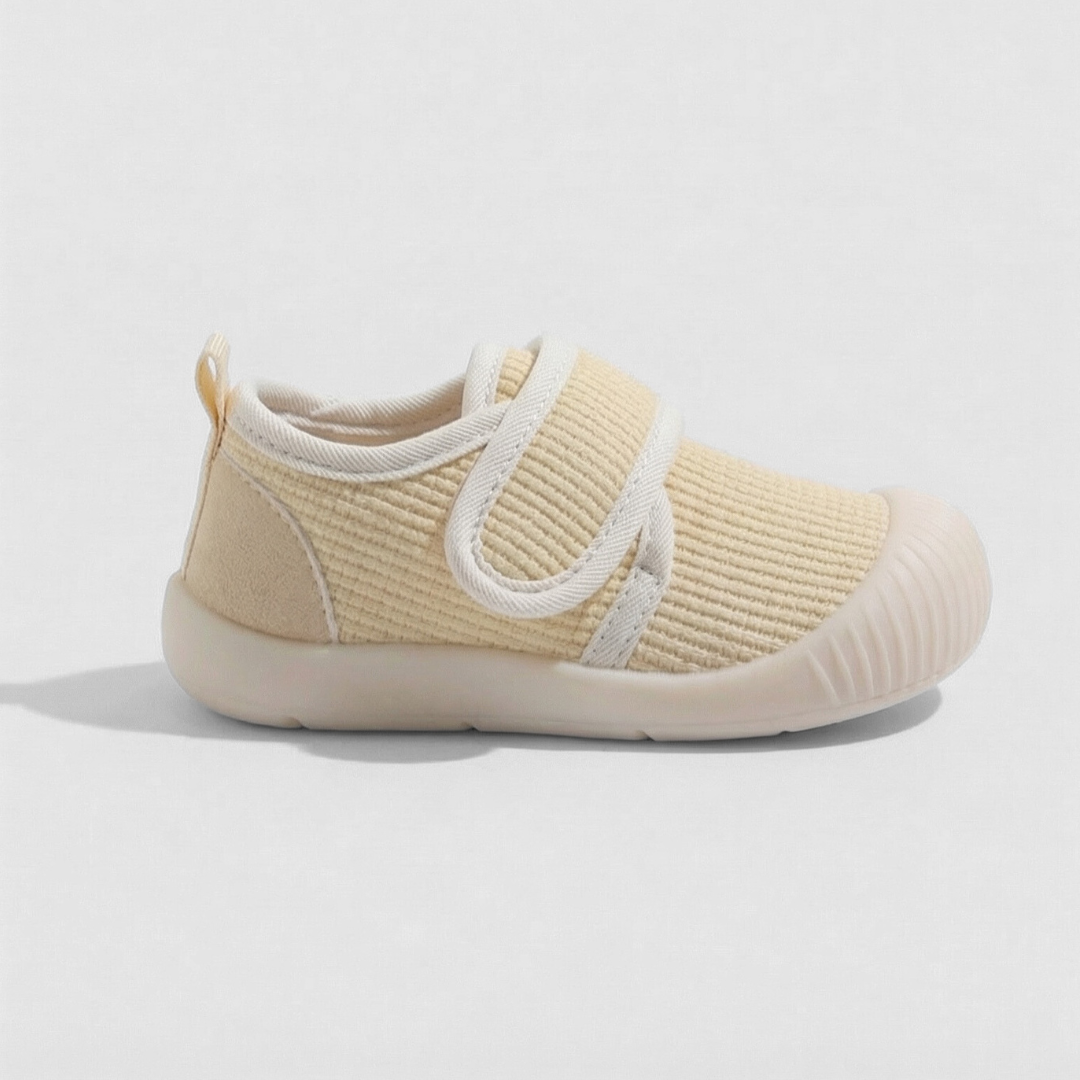
- Soft, easy-on shoes for rest stops. Flexible shoes that slip on quickly, like our flexible first walker shoes, make it easier to let your toddler out to walk around. For a breathable option, see our guide to baby mesh shoes.
Health and safety
- A basic first aid kit and any medicines your child takes
- Your pediatrician's phone number and, if your child has a chronic condition, a copy of recent medical records (MedlinePlus suggests this too)
- Bags, wipes and a towel in case of car sickness
- A winter emergency bag with extra blankets, dry clothes, hats, gloves and non-perishable snacks
- Outlet covers and painter's tape for the hotel room (more on that below)

Road trip with a toddler: tips for a calmer drive
1. Plan your stops
The AAP recommends planning to stop and give yourself and your child a break about every two hours. For babies, an AAP pediatrician suggests a break every 2 to 3 hours on a day trip and every 4 to 6 hours at night for diaper changes, feeding and stretching. Look up rest stops, parks and gas stations along your route before you leave.
Use stops for real movement, not just a diaper change. A quick walk, a few minutes on a playground or holding hands to practice steps all help. If your little one is just getting the hang of walking, our list of ways to help your baby walk has simple ideas that work in a grassy rest area too.

2. Drive around naps and bedtime
The AAP suggests starting early in the morning while your child may still be sleeping, driving during longer naps, or, for long trips, driving at night when your child normally sleeps. Our baby sleep schedule by age can help you map the drive to your child's usual naps.
Night driving only works if the driver is well rested. NHTSA's page on drowsy driving notes that drowsy-driving crashes happen most often between midnight and 6 a.m. and in the late afternoon. Swap drivers, and pull over if you feel tired.
3. Seat an adult in the back if you can
An adult in the back seat can hand out snacks and toys, sing, read and spot early signs of car sickness. The AAP notes this helps babies stay closer to their usual schedule. If you're breastfeeding, always stop the car first; the AAP says never to breastfeed in a moving car.
4. Skip puffy coats in the car seat
Holiday road trips often mean cold weather. The AAP's winter car seat safety tips explain that bulky coats and snowsuits shouldn't be worn under the harness, because the padding flattens in a crash and leaves the straps too loose. Instead:
- Dress your child in thin, close-fitting layers, like leggings, a long-sleeved bodysuit and a thin fleece.
- Buckle them in and tighten the harness until you can't pinch any slack.
- Lay a blanket or their coat (on backwards) over the buckled straps.
- Avoid add-on inserts or bundling products that didn't come with the car seat, since they haven't been crash tested with it.
5. Be ready for car sickness
Young children often can't say they feel queasy. The AAP's guide to car sickness says toddlers may instead become pale and restless, yawn or cry. If that happens, stop as soon as it's safe and let them walk around. To help prevent it, the AAP suggests a light snack before the trip if your child hasn't eaten in about three hours, encouraging them to look out the window rather than at books, and distracting them with music or singing. Ask your pediatrician before giving any motion sickness medicine.
6. Play screen-free car games
The AAP's list of road trip play ideas for backseat fun includes simple games that work for toddlers:
- I spy with colors: "I spy something red."
- Copy the sound: make a bird call or a silly "la la la" and let them repeat it.
- Car-seat Simon says: "Simon says touch your nose."
- Guess the animal: "I'm big and gray and have a trunk."
- Sing songs with hand motions, like "The Itsy Bitsy Spider." Our list of songs to sing to your baby has more favorites.
The AAP also reminds parents that not every minute needs to be filled. A bit of boredom gives kids room to daydream and look around.
7. Never leave your child alone in the car
Even a quick stop for coffee or gas counts. The AAP's page on preventing child deaths in hot cars says a car can heat up 20 degrees Fahrenheit in just 10 minutes, and heatstroke can happen when it's as cool as 57 degrees outside. The AAP says to be extra alert when your routine changes, and a road trip is a big change. Put your phone or bag in the back seat, and always check the back before you lock the car.
When you arrive: settle in safely
The AAP says a car seat is fine for sleeping while the car is moving, but it isn't a safe place for your child to sleep once you're out of the car. Move a sleeping baby or toddler to a firm, flat sleep space when you arrive.
The AAP's hotel safety tips for parents recommend a quick check of any new room:
- Use a portable crib or play yard rather than sharing a bed, and make sure any crib you're given is in good repair.
- Do a "safety crawl" to look for dropped pills or small objects under beds and dressers.
- Pack medicines and small items in separate bags and put them up high as soon as you unpack.
- Cover outlets, tape up blind cords and push the TV back from the edge.
- Keep the bathroom door closed and know where the pool is.
New places are exciting, and toddlers love to explore. Our guide to toddler milestones by age shows how quickly climbing and exploring skills grow between 1 and 3. Flying instead of driving? Our flying with baby tips cover airports, ear pressure and a packing list for the plane.
Frequently asked questions
How often should you stop on a road trip with a toddler?
The AAP suggests taking a break about every two hours. Stopping more often is fine, especially if your child is feeling carsick or restless, and longer stretches may work when your toddler is asleep.
Is it better to drive at night with a toddler?
It can be, since many toddlers sleep through more of the drive. The AAP lists night driving as an option for long trips. Just make sure the driver is well rested, since NHTSA notes that drowsy-driving crashes happen most often between midnight and 6 a.m. If you're tired, it's safer to stop.
What should I pack in the car for a toddler?
Keep diapers or potty supplies, wipes, snacks, water, a change of clothes, a comfort item, a few toys, bags for messes and any medicines within reach. Bulky items like the play yard can go in the trunk.
Can my toddler wear a winter coat in the car seat?
The AAP says no bulky coats or snowsuits under the harness. Dress your child in thin layers, buckle them in snugly, then put a blanket or their coat over the straps.
This article is for general informational purposes only and isn't a substitute for professional medical advice. Every child is different. If you have questions or concerns about your child's health, car sickness or whether they're ready for a long trip, please talk with your pediatrician.
Sources
- American Academy of Pediatrics, HealthyChildren.org, Tips for Safe & Stress-Free Family Travel, Is It Safe for My Baby to Travel in a Car Seat for Hours at a Time?, Car Seats: Information for Families, Winter Car Seat Safety Tips, Car Sickness, Screen-Free Road Trip Activities for Kids of All Ages, Prevent Child Deaths in Hot Cars and Hotel Safety Tips for Parents of Young Children
- National Highway Traffic Safety Administration (NHTSA), Car Seats and Booster Seats and Drowsy Driving
- Centers for Disease Control and Prevention (CDC), Child Passenger Safety
- MedlinePlus (U.S. National Library of Medicine), Traveling with Children





Share and get 15% off!
Simply share this product on one of the following social networks and you will unlock 15% off!